Originally published on LinkedIn
This perspective began as part of a public industry conversation on LinkedIn.
________________________
A brand emerges: small-scale, creative, and unique, with authentic stories to tell—a hidden gem. Over time, things start to change: release intervals shorten, creativity stalls, the brand expands into unrelated product categories, and diversifies its sales channels. Eventually, it's absorbed by a larger company.
This is the story of many niche fragrance brands.
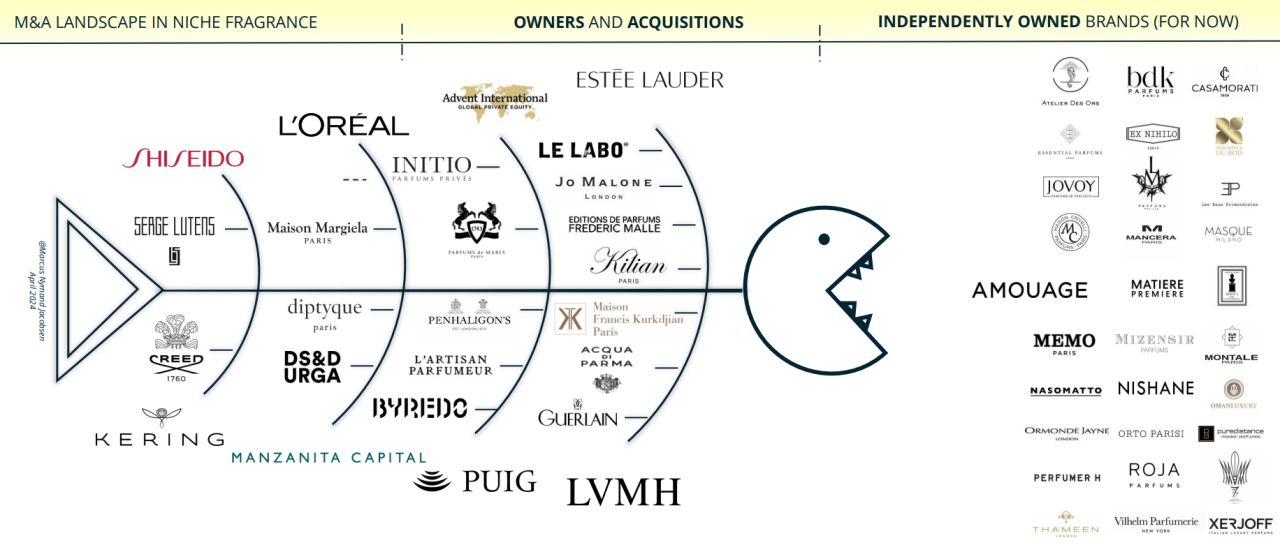
Niche has become the new luxury of fragrance, captivating consumers with the allure of the genuine and authentic and downplaying of all that is commercial through putting back emphasis on the artistry, creators and people. Luxury conglomerates find it simpler to acquire than to spend years building this. Consequently, niche fragrance brands are swallowed up in a wild M&A environment, as illustrated below.
What do consumers think about this? 🙅♂️
News of L'Oréal's rumored minority stake purchase in Amouage sparked significant reactions within fragrance communities, echoing concerns over a familiar narrative: the rise, acquisition, and eventual dilution of once-great brands.
Why do brands sell?
I believe the journey of most brands start without an exit strategy, striving to carve a niche with a unique identity and stay true to it. However, the latter is challenging because luxury brands are always on the hot seat of having to grow and evolve in order to stay afloat. Growth is often financed through stretching the brand and ultimately through an acquisition, all of which paradoxically hurts its initial authenticity.
Chain of events ⛓
However, many consumers jump ship long before an acquisition, sensing the brand's shift towards commercialism. Authenticity doesn't vanish overnight; it gradually wanes through the lowering of brand standards.
Weak link 🔗
Brands typically first loosen their grip on distribution. While the ideal is for each brand to operate its own store or shop-in-shop, achieving profitability demands substantial turnover—an investment few can afford upfront.
While selective distribution in specialized stores offers great representation, w/o large financial backing, this standard is less sustained further, where exclusivity and brand equity often fade.
The curveball of business reality 🎾
In fragrance, there's the maceration curve: the optimal time when a scent reaches its full depth and complexity. However, the reality is that - symptomatic of many other aspects of business - this is wishful thinking because brands can't afford to wait that long.
Niche brands, while often romanticized, are constantly confronted by the harsh realities of business survival, tempting many with the allure of growth, which strikes at the very heart of what initially set the brand apart - its authenticity - presenting an existential dilemma.
It's important to grasp why many tales lose some of their magic here, but even more so to cherish the few who endure, upholding their independence—today's ultimate symbol of brand authenticity.
________________________
SELECTED RESPONSES
From the LinkedIn discussion
A selection of thoughtful reactions and comments surrounding the original article.
Amen! It is a struggle to remain true to our passion to develop quality fragrances for the market. The most frustrating thing for us independent fragrance brands (“niche” has lost its meaning) is that all the boutiques and larger retailers claim they want “new and interesting” but, even when they love love love your products, they revert to the easy selling, commercial “niche” brands who have LVMH or EL budgets to flood media with sponsorships and ads about how “niche” they are. To your point, actual boutique brands are left chasing smaller accounts of the few who appreciate the fine art of perfumery. The risk is that these don’t generate enough funds for new products or marketing to compete and the lag in funding can be too long to survive. It’s the passion for fragrance creation and the confidence in our own products that fuels our optimism in an ever challenging market. I still believe that that has resonance with fragrance enthusiasts and will chart the path forward, albeit step by step.

Christopher Draghi
Co-founder of Source Adage Fragrances
Previous
1 / 3
Next

Originally published on LinkedIn
This perspective began as part of a public industry conversation on LinkedIn.
________________________
A brand emerges: small-scale, creative, and unique, with authentic stories to tell—a hidden gem. Over time, things start to change: release intervals shorten, creativity stalls, the brand expands into unrelated product categories, and diversifies its sales channels. Eventually, it's absorbed by a larger company.
This is the story of many niche fragrance brands.
Niche has become the new luxury of fragrance, captivating consumers with the allure of the genuine and authentic and downplaying of all that is commercial through putting back emphasis on the artistry, creators and people. Luxury conglomerates find it simpler to acquire than to spend years building this. Consequently, niche fragrance brands are swallowed up in a wild M&A environment, as illustrated below.
What do consumers think about this? 🙅♂️
News of L'Oréal's rumored minority stake purchase in Amouage sparked significant reactions within fragrance communities, echoing concerns over a familiar narrative: the rise, acquisition, and eventual dilution of once-great brands.
Why do brands sell?
I believe the journey of most brands start without an exit strategy, striving to carve a niche with a unique identity and stay true to it. However, the latter is challenging because luxury brands are always on the hot seat of having to grow and evolve in order to stay afloat. Growth is often financed through stretching the brand and ultimately through an acquisition, all of which paradoxically hurts its initial authenticity.
Chain of events ⛓
However, many consumers jump ship long before an acquisition, sensing the brand's shift towards commercialism. Authenticity doesn't vanish overnight; it gradually wanes through the lowering of brand standards.
Weak link 🔗
Brands typically first loosen their grip on distribution. While the ideal is for each brand to operate its own store or shop-in-shop, achieving profitability demands substantial turnover—an investment few can afford upfront.
While selective distribution in specialized stores offers great representation, w/o large financial backing, this standard is less sustained further, where exclusivity and brand equity often fade.
The curveball of business reality 🎾
In fragrance, there's the maceration curve: the optimal time when a scent reaches its full depth and complexity. However, the reality is that - symptomatic of many other aspects of business - this is wishful thinking because brands can't afford to wait that long.
Niche brands, while often romanticized, are constantly confronted by the harsh realities of business survival, tempting many with the allure of growth, which strikes at the very heart of what initially set the brand apart - its authenticity - presenting an existential dilemma.
It's important to grasp why many tales lose some of their magic here, but even more so to cherish the few who endure, upholding their independence—today's ultimate symbol of brand authenticity.
________________________
SELECTED RESPONSES
From the LinkedIn discussion
A selection of thoughtful reactions and comments surrounding the original article.
Amen! It is a struggle to remain true to our passion to develop quality fragrances for the market. The most frustrating thing for us independent fragrance brands (“niche” has lost its meaning) is that all the boutiques and larger retailers claim they want “new and interesting” but, even when they love love love your products, they revert to the easy selling, commercial “niche” brands who have LVMH or EL budgets to flood media with sponsorships and ads about how “niche” they are. To your point, actual boutique brands are left chasing smaller accounts of the few who appreciate the fine art of perfumery. The risk is that these don’t generate enough funds for new products or marketing to compete and the lag in funding can be too long to survive. It’s the passion for fragrance creation and the confidence in our own products that fuels our optimism in an ever challenging market. I still believe that that has resonance with fragrance enthusiasts and will chart the path forward, albeit step by step.
Christopher Draghi
Co-founder of Source Adage Fragrances
Previous
1 / 3
Next